
Chongqing
Fuling presents a lush green façade, but underneath it is the 816 Project Chongqing, which offers a glimpse into one of the region’s most unusual historical chapters.
Why visit
Fuling presents a lush green façade, but underneath it is the 816 Project Chongqing, which offers a glimpse into one of the region’s most unusual historical chapters.
Fuling presents a lush green façade, but underneath it is the 816 Project Chongqing, which offers a glimpse into one of the region’s most unusual historical chapters. It’s a vast underground complex, comprising caves and chambers joined by a maze of tunnels. If you’re on a Yangtze River cruise, the Cold War facility, which is elegantly curved into the mountain, reveals history in a setting like no other.
What Is the 816 Project?
The 816 Project is an underground facility in Chongqing, located deep within the mountains of Fuling. Its construction began in 1966, as China was experiencing tense international relations during the Cold War. As a secret site commissioned to support plutonium production, much of the operation is safely tucked beneath layers of rock.
The facility’s entrance is on the side of a mountain and feeds into a network of 17 connected man-made caves. With wide roads, tunnels, chambers, and open spaces, the sheer scale of the 816 Project is difficult to imagine until you step inside. Today, the Chongqing 816 nuclear cave gives visitors a rare look at how the Cold War metastasized on the ground.
Cold War History and Construction
In the 1960s, relations between China and the Soviet Union were deteriorating. Tension was in the atmosphere, and fear touched everyday life. China began developing a heavily protected underground facility designed to hide weapons-related work. The selected site was deep in the mountains of Fuling.
Construction of the underground military complex began in 1966 and continued for the next 17 years. The process was physically intense, with workers carving huge chasms and wide tunnels directly into the mountain. Remember, technology was also limited at the time. It took a massive effort to create the hidden world of concrete passageways and cavernous spaces.
The 816 Project ended in 1984 as tensions were easing. While the facility was intended to be a plutonium-239 production station, it was never used as an active nuclear site. Thus, it poses no radiation dangers. Authorities declassified it in 2002. However, it wasn’t until 2010 that it was opened to tourists, offering a peek into China’s Cold War past.
Inside the Underground Cave Complex
At its heart, the 816 Project is a Cold War engineering marvel. Every passageway and chamber reveals the character of an ambitious project concealed beneath calm mountains.
Into the Mountain
Once you step into the 816 Project, it feels like a different world. The lush mountainous vegetation disappears, giving way to passages and stairways that stretch into the rock. The pathways form an intricate network that leads to 17 artificial caves and several chambers.
A Hidden World of Engineering
The 816 Project has been described as the world’s largest artificial cave. Its walls are towering, making the tunnels extraordinarily wide. However, the deeper you go underground, the rawer the sections of the facility get. You’ll see concrete structures, industrial spaces, narrow passages, and cavernous chambers.
Of course, the experience feels different from that of, say, visiting a museum. Instead of observing artifacts behind glass, the 816 Project lets history unfold right before your eyes. The environment becomes part of the story, making this Cold War attraction particularly intriguing.
Restricted Sections
Some sections of the 816 Project aren’t open to the public yet. About two-thirds of the complex remains restricted due to factors like structural preservation and confidential engineering layouts. However, the accessible parts are worth every detail they reveal.
A Mountain Setting in Fuling
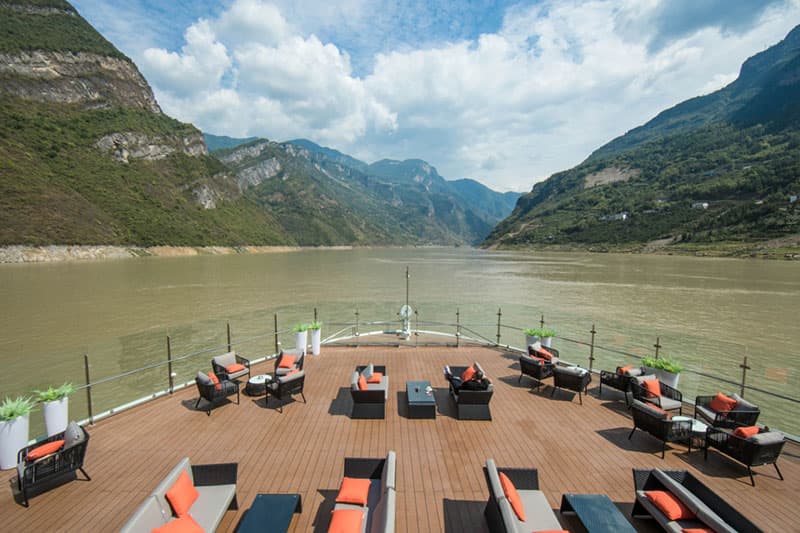
One of the elements that makes the 816 Project appealing is its picturesque mountain landscape, which provides a striking backdrop. The green hills, quiet valleys, and layers of rugged rock make it impossible to imagine that such a facility lies beneath the surface. The peaceful scenery contrasts with the network of tunnels and chambers that make up the hidden cave site.
Visiting the 816 Project From a Yangtze River Cruise
If you’re on a Yangtze River cruise, expect to savor more than beautiful scenery and a string of riverbank towns. For travelers stopping in the Chongqing region, an 816 Project guide can add an unexpected chapter to your trip. For a moment, you’ll leave the familiar territory and explore an underground site that tells a story about how the Cold War unfolded in China.
During a Chongqing excursion, landmarks and mountains are usually at the top of the list. However, history lovers can delve into the city’s hidden past and explore an expansive underworld carved into a mountain. Add the 816 Project to your destinations and make your Yangtze River journey much more memorable.
Discover the 816 Project
From the peaceful mountains of Fuling, the 816 Project opens up to remarkable underground engineering. The facility brings the Cold War story to life with surreal tunnels and caves.
Book your river cruise with Century Cruises and discover this extraordinary destination along the way.
Speak to a specialist
Plan a voyage through Chongqing
Tell us how long you have and what you want to see, and a specialist will put together the sailing and the land arrangements around it.
1-833-940-6254Toll-free · Reservations & travel-advisor support
Request a quote
Our knowledgeable team is here to help with any questions and guide you through your cruise options.
Request a brochure
Learn more about Century Cruises and the river cruise experiences we create across the world’s great waterways.